


A beginner needs very little equipment to start yoga, and a decent non-slip mat is the one prop genuinely worth prioritizing to prevent slipping and protect knees and wrists. A yoga block helps in poses where flexibility is still developing and can be substituted with a thick hardcover book, while a strap (substitutable with a dupatta or old belt) helps with reach, and a bolster (substitutable with a rolled blanket) supports restorative poses. Expensive branded mats, yoga wheels, and matching outfit sets are not necessary for a beginner's practice.
Key Takeaways
- A non-slip yoga mat is the one prop genuinely worth prioritizing for a beginner
- A thick book, a dupatta, or a rolled blanket work as genuine free substitutes for a block, strap, or bolster
- Expensive branded mats, yoga wheels, and matching outfit sets are not necessary for results
- Real props become worth buying only once regular practice reveals a specific, recurring support need
Advertisement
A beginner needs very little equipment to start yoga: a mat you won't slip on and clothes you can move in are genuinely enough for your first several months of practice. Everything else that gets marketed to you (the color coordinated block sets, the imported bolsters, the yoga wheels that promise to "open your spine") is optional at best and, for most new practitioners, completely unnecessary.
This matters more than it sounds like it should, because the yoga industry has done a remarkable job convincing beginners that they can't step onto a mat without first spending a few thousand rupees on props. It's a strange irony, since yoga was born in India using nothing but a floor, a breath, and patience. Somewhere between the ashrams and the Instagram reels, the practice got tangled up with a shopping list.
So let's untangle it. This guide walks through what a beginner actually needs, what household items work just as well as the props sold online, and when (if ever) it makes sense to invest in the real thing. If you're also figuring out how to fold a regular practice into your mornings, our piece on a morning yoga routine for beginners is a good companion read alongside this one.
Why You Don't Need a Shopping Cart to Start Yoga
Before we get into individual props, it helps to understand why this myth exists in the first place. Yoga studios and prop brands make money by selling accessories, so naturally their marketing leans hard on the idea that "proper" practice requires proper gear. Scroll through any yoga page online and you'll see beautifully lit photos of blocks, straps, wheels, bolsters, and blankets, all arranged like a spa catalogue. It looks aspirational. It also has almost nothing to do with whether your downward dog improves.
The Industry's Favorite Myth
The truth is that props exist to make certain poses more accessible, not to make you a "real" yogi. A block doesn't make your practice more legitimate. It just brings the floor a little closer when your hamstrings aren't ready to meet it yet. Once you understand that props are functional tools and not status symbols, the whole shopping list shrinks dramatically.
What Indian Households Already Have Going for Them
There's also a practical advantage many Indian beginners don't realize they already have. Years of sitting cross legged on the floor for meals, prayer, or simply relaxing at home build a baseline of hip and ankle mobility that a lot of Western beginners lack entirely. Poses like Sukhasana (easy seated pose) or even parts of Malasana (garland pose) often come more naturally if you've spent a lifetime sitting on the floor instead of on chairs. That's not a small thing. It means some of the "flexibility gap" that props are meant to bridge may simply be smaller for you to begin with.
The One Prop Worth Buying: A Non-Slip Mat
If there's a single item on this list worth genuinely prioritizing, it's a decent mat. Not because yoga demands a specific surface to be "authentic," but because a hard floor is unforgiving on knees, wrists, and tailbones, and a slippery surface can turn a simple pose into a fall. A good mat solves both problems at once.
Why This One Isn't Optional Like the Rest
Every other prop on this list has a genuine free substitute sitting somewhere in your house. A mat doesn't, at least not a reliable one. Old bedsheets bunch up. Carpets are too soft and unstable for balance poses. Smooth tile is dangerous the moment your palms sweat even slightly. A proper mat gives your hands and feet the grip they need to hold poses safely, and that safety factor is exactly why this is the one place your money is well spent, even if it's a modest amount.
What to Actually Look For (Without Overspending)
You don't need the most expensive mat on the shelf. Look for a thickness of around 4 to 6 millimeters, enough cushioning for your joints without being so thick that you feel unstable in standing poses. Check that the surface has some texture or grip rather than a glossy, slick finish. Beyond that, color, brand name, and price tag above a certain point are mostly irrelevant to how your practice actually feels. A mid range mat from a local sports shop will serve you just as well as one that costs five times more and has a bigger logo.
Also Read
Advertisement
Yoga Blocks: What They're Really For
Yoga blocks confuse a lot of beginners because they look like they're meant for advanced practitioners doing complicated variations. In reality, blocks exist almost entirely to help people who are newer to the practice, not people who are further along in it.
Bringing the Floor Closer
Think about a pose like a standing forward fold with your hands reaching for the ground, or a triangle pose where your bottom hand is supposed to touch your shin or the floor. If your hamstrings or hips aren't there yet, you either round your back trying to force the reach, or you just hover awkwardly in the air. A block placed under your hand effectively raises the floor to meet you, letting you keep proper alignment while your flexibility catches up over weeks and months. It's also genuinely useful for balance poses, where a block under a lifted foot or between the thighs gives you something stable to press against.
The Thick Book Trick
Here's where the substitute argument becomes almost embarrassingly simple: a thick hardcover book or a stack of a few magazines does exactly the same job as a purchased block. The height is adjustable (add or remove a book), the surface is stable, and it costs you nothing beyond what's already on your shelf. Some people even prefer a firm cushion or a stack of two or three paperback books tied together with a rubber band. If you're working through alignment issues in specific poses, this is also a good moment to revisit our guide on yoga posture correction, since blocks (or books) are frequently the missing piece in fixing a pose that's been feeling "off."
Yoga Straps: Bridging the Gap Your Flexibility Hasn't Closed Yet
A strap solves a very specific problem: what to do when a pose asks you to hold something (usually your own foot or hand) that's simply out of reach right now.
When a Strap Actually Helps
Take a seated forward fold where you're meant to hold your feet, or a reclined hand to big toe pose where you extend one leg up and try to hold the foot with a straight arm. For most beginners, that reach just isn't there yet, and trying to force it usually means bending the knee, rounding the spine, or straining somewhere that shouldn't be strained. Loop a strap around your foot instead, and suddenly you can hold the pose correctly with straight lines and proper form, while your body gradually builds the flexibility to eventually not need the extra length at all.
The Dupatta and Belt Solution
An old dupatta, a bathrobe tie, or a spare fabric belt works precisely the same way as a shop bought strap. Fold it if it's too wide, and you have a soft, adjustable loop that does the exact job a strap is designed for. There is nothing a rubberized, logo printed yoga strap does that a repurposed dupatta cannot. If anything, the dupatta is gentler on skin than some of the stiffer synthetic straps sold online.
Bolsters: Comfort for Restorative and Reclined Poses
Bolsters show up mostly in restorative practice, the slower, gentler style of yoga where poses are held for several minutes with the body fully supported.
What a Bolster Actually Does
In poses like a reclined bound angle pose or a supported child's pose, a bolster sits under your back, chest, or knees to remove the effort of holding a position and let your muscles fully release instead. The point isn't stretching harder. It's stretching with zero strain, which is the entire purpose of restorative work, and it's genuinely difficult to do properly without some kind of support under you.
Rolled Blankets and Stacked Pillows
A firmly rolled blanket does this job just as effectively as a purchased bolster, and so does a couple of pillows stacked and pressed together. The shape doesn't need to be perfect. What matters is that it's firm enough to hold your body weight without collapsing flat, and long enough to support the stretch of your spine or legs. For nearly all home practice, a rolled blanket or a folded quilt will outperform a flimsy, cheaply stuffed bolster you might otherwise be tempted to buy.
What You Genuinely Don't Need as a Beginner
Now for the honest part of this guide: the list of things that get marketed heavily to new yoga students but do almost nothing for your actual results.
Expensive Branded Mats and Yoga Wheels
A mat that costs several times more than a standard one because of a designer name doesn't grip the floor any better or protect your knees any more than a mid range mat does. Yoga wheels, the round prop meant to help with backbends, are genuinely niche tools that most beginners won't need for months, if ever, since backbends deep enough to require a wheel come well after the basics are solid. Buying one on day one is buying a solution to a problem you don't have yet.
Trendy Colors and Matching Outfit Sets
Coordinated leggings, tops, and blocks in matching pastel shades might look appealing in an ad, but none of it affects your alignment, your breath, or your strength. This is worth saying plainly because so much of yoga marketing leans on the aesthetic of the practice rather than the substance of it. Comfortable clothes that let you move and bend without restriction are all you need on that front, regardless of whether they match anything else.
Your Beginner Prop Cheat Sheet
If you want the short version of everything above, here's a quick reference table you can save or screenshot before your next practice session.
| Prop | What It's For | Free Household Substitute |
|---|---|---|
| Yoga Mat | Grip and cushioning to prevent slipping and protect knees/wrists | None reliable; worth buying a modest, non-slip one |
| Yoga Block | Brings the floor closer in forward folds; supports balance poses | A thick hardcover book or a tied stack of magazines |
| Yoga Strap | Extends your reach in poses that need more flexibility than you currently have | An old dupatta, bathrobe tie, or spare belt |
| Bolster | Support in restorative and reclined poses so muscles fully release | A firmly rolled blanket or two stacked pillows |
| Yoga Wheel | Assists deep backbends (rarely needed by beginners) | Not typically needed until much later, if at all |
When Buying Real Props Actually Makes Sense
None of this means you should never buy a proper block or strap. It just means the timing matters more than the industry lets on.
Signs You've Outgrown the Substitutes
Once you've been practicing consistently for a few months and you notice that a specific pose keeps feeling limited, not because of laziness but because your book keeps sliding or your dupatta keeps slipping out of your grip mid pose, that's a reasonable signal. At that point you know exactly which prop you're reaching for and why, which is a very different starting point than buying a full set before you've even rolled out a mat. If sticking with practice long enough to notice these patterns has been the hard part, our article on how to build a workout habit that sticks covers the consistency side of things, which honestly matters more than any prop ever will.
What to Invest In First
If and when you do decide to spend money, a single cork or dense foam block is usually the best first purchase, since it's the most versatile prop across the widest range of poses. A strap comes next if you're working on deeper stretches. A bolster is the last thing most home practitioners need, since a rolled blanket does the job so well that the upgrade rarely feels necessary even after months of regular practice. And regular practice, more than any prop, is what actually changes how your body feels; the benefits of daily yoga practice show up from consistency, not from equipment.
The Bottom Line
Yoga was never meant to be an expensive hobby, and the props sold to beginners today are a fairly recent invention layered on top of a practice that's thousands of years old and was originally done on bare ground. A good non-slip mat is worth buying because it protects your body in a way nothing at home safely can. Everything past that, blocks, straps, bolsters, can be replaced with a book, a dupatta, and a rolled blanket without losing a single benefit of the pose you're practicing.
Save your money for later, once you actually know what your practice needs rather than what a product page tells you it needs. Roll out whatever mat you can afford, grab a book off your shelf, and start. That's genuinely all it takes to begin.
Top Picks For You
Handpicked & Editor Approved
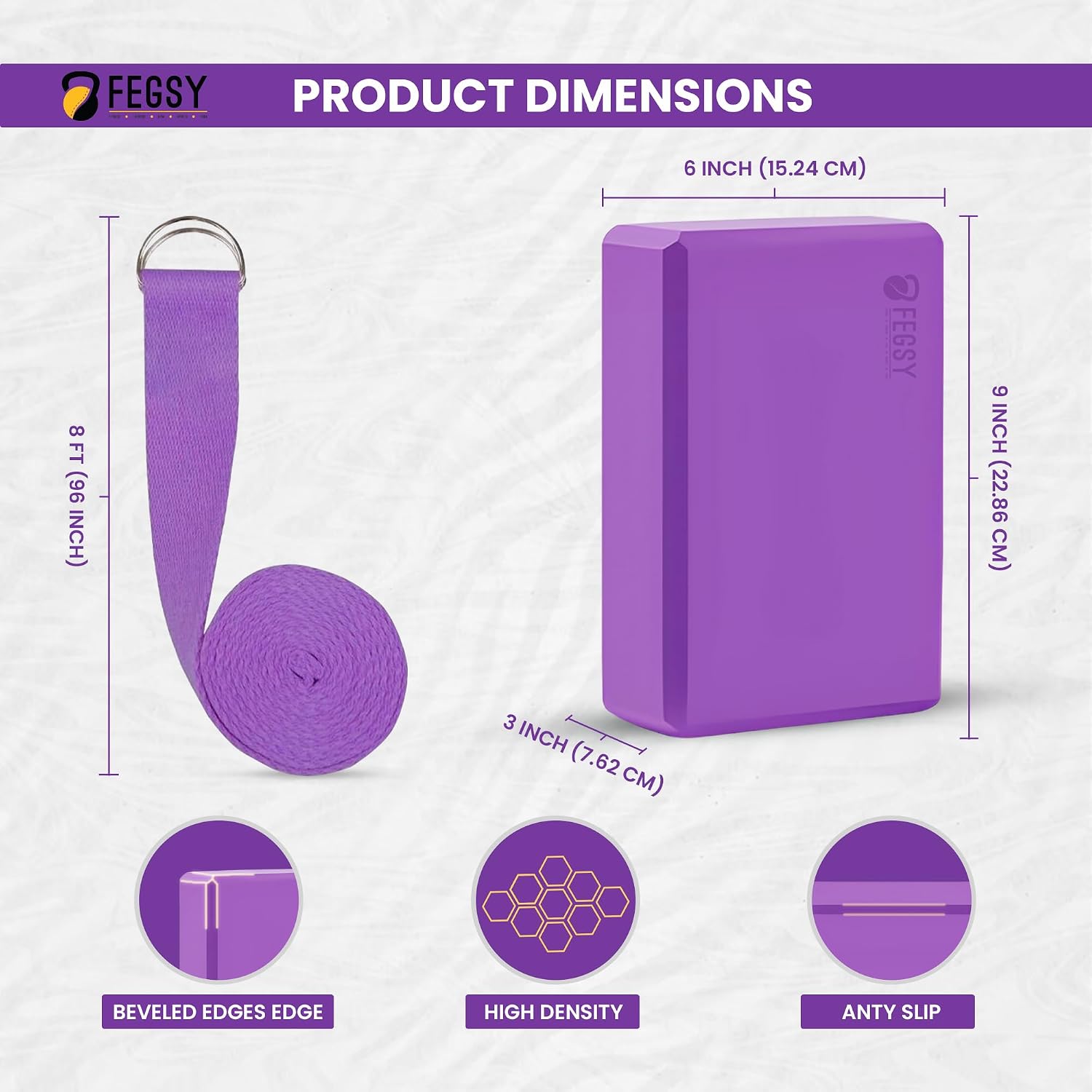
Affiliate Disclosure: Links above are affiliate links. We earn a small commission if you purchase at no extra cost to you. We only recommend products we genuinely believe in.
Advertisement
Frequently Asked Questions
Do I need to buy a yoga mat to start practicing?
What can I use instead of a yoga block?
Do I need an expensive branded mat or yoga wheel as a beginner?
When is it worth actually buying real yoga props?
Previous
Maternity Wear for Indian Summers: What Actually Keeps You Comfortable
Next
How to Reduce Sugar Intake Without Feeling Deprived
Written by
Manali Patel
Manali Patel is the founder and lead beauty editor at Beauty & Blushed. With over 7 years of experience in the beauty and wellness industry, she is a certified skincare consultant and trained yoga practitioner who specialises in skin health, haircare, and holistic women's wellness. Her work has helped thousands of Indian women build practical, sustainable self-care routines that actually fit their lives.
More about Manali →Advertisement
Related Articles

Yoga for Self-Love: Building a Kinder Relationship With Your Body
Yoga for self-love is about how a pose feels, not how it looks. Here is a gentler way to practice that builds…

Yoga for Posture Correction: Fixing Tech Neck and Desk-Job Slouch
Hours at a desk and hours bent over a phone reshape your body slowly. Here is a yoga-based approach to actuall…

Yoga for Digestion: Poses That Actually Help Bloating
Vajrasana is the only asana traditionally done right after eating. Here is why, plus the poses that genuinely…
