


Somatic yoga is a slow, sensation-led practice where you move by internal feel rather than by holding shapes, which trains interoception and helps shift the body out of a chronic stress response. It differs from regular yoga in that nothing is measured by how the pose looks. It supports anxiety management but is not a treatment for a clinical anxiety disorder and does not replace therapy or medication.
Key Takeaways
- Somatic yoga is led by internal sensation, not by how a pose looks from outside
- Polyvagal theory is a useful framework for this work but remains contested in neuroscience
- Slow exhales that are longer than the inhale are the simplest nervous system down-shift
- Somatic work can surface trauma responses - anyone with PTSD should work with a trauma-informed teacher
Advertisement
Somatic yoga is a slow, inward-facing style of movement in which you follow the felt sensation inside your body rather than trying to reach a shape, using small, repeated, deliberately unhurried motions to help your nervous system shift out of a stress state. That is the whole thing. No mirror, no alignment cues shouted across a room, no worrying whether your heels touch the floor in downward dog. The question in a somatic class isn't "am I doing this right?" It's "what does this actually feel like from the inside?"
Which, if you're an Indian woman reading this at 11:40 pm with tomorrow's tiffin half-packed and a WhatsApp group still buzzing about someone's engagement function, might be the strangest question anyone has asked you all year. We're trained to monitor how things look from the outside. How the house looks when guests arrive. How we look in the family photo. How we're managing, when an aunt asks. Turning that attention inward feels almost illegal at first.
But that inward turn is exactly the point, and it's also why somatic yoga has quietly become one of the most talked-about approaches to anxiety in the last few years. It isn't a workout. It's a way of teaching a body that has been braced for months, sometimes years, that it's allowed to stop bracing. Let's get into what it really is, what the science does and doesn't support, and a fifteen-minute sequence you can do tonight on the floor of a small flat with nothing but a folded bedsheet.
What Somatic Yoga Actually Is (And What It Isn't)
The word "somatic" comes from soma, meaning the body as experienced from within. So somatic practices are, by definition, first-person. A regular yoga class is largely third-person: the teacher sees your shape, corrects it, you adjust. A somatic class hands the steering wheel back to you, and honestly, that can feel disorienting for about the first three sessions.
Interoception Is the Whole Skill
The technical name for the ability being trained here is interoception, your sense of your own internal state. Hunger, thirst, heartbeat, breath, the tightness under your ribs, the buzzing in your hands. Research over the last decade has consistently found that people with anxiety often have a strange relationship with interoception. They either feel internal signals too loudly and misread them as danger, or they've gone numb to them entirely and only notice something is wrong when they're already in a full spiral.
Somatic yoga trains the middle ground. You learn to notice a sensation, stay with it, and observe that it changes on its own without you needing to fix, escape, or catastrophise. That's a genuinely learnable skill, and it transfers. Once you can sit with a tight jaw for forty seconds and watch it soften, you have a slightly better chance of sitting with a rude message from your mother-in-law without your whole day collapsing.
Slow Means Slower Than You Think
New practitioners consistently move too fast. When a somatic instruction says to lift your arm, it means over roughly twenty seconds, noticing every millimetre. The slowness isn't aesthetic. Fast movement is handled largely by automatic motor patterns; slow, novel movement demands conscious attention and appears to engage the brain differently. Slowness is what makes the practice a nervous system practice rather than a stretching session.
Repetition Over Perfection
You'll often repeat one small movement eight or ten times, each time slightly differently. This borrows from Feldenkrais and Hanna Somatics, two twentieth-century movement methods that heavily influenced modern somatic yoga. The repetition gives your brain enough data to update its map of that body part. Chronically tight shoulders often aren't tight because the muscle is short. They're tight because your brain has been holding a "danger, stay ready" instruction there for so long it forgot to send the off signal.
The Vagus Nerve Framework: Useful, But Let's Be Honest About It
Every somatic yoga reel on Instagram mentions the vagus nerve, usually with enormous confidence. Let's be more careful than that, because the honest version is genuinely more interesting.
What We Actually Know
The vagus nerve is the longest cranial nerve, running from the brainstem down through the neck and chest into the abdomen. It's the main highway of the parasympathetic nervous system, the branch associated with rest, digestion, and recovery. Crucially, most of its fibres are afferent, meaning they carry information from your body up to your brain rather than the other way round. Your gut and heart are constantly reporting to your brain, and your brain uses those reports to decide how safe you are.
Vagal tone is usually estimated through heart rate variability, the small variation in time between heartbeats. Higher variability broadly correlates with better stress recovery and emotional flexibility. And slow breathing, particularly with a longer exhale than inhale, reliably raises heart rate variability in the moment. That part is well established and easy to replicate. It's also, notably, something Indian tradition figured out a very long time ago without any instruments, which is why the structured breathing techniques of pranayama map so neatly onto what modern labs now measure.
Where the Overclaiming Starts
Polyvagal theory, developed by Stephen Porges, is the framework most somatic teachers borrow from. It proposes three hierarchical nervous system states: a ventral vagal social-engagement state, a sympathetic fight-or-flight state, and a dorsal vagal shutdown or freeze state. It's an elegant model and an extremely useful one for describing lived experience, because most anxious people immediately recognise all three states in themselves.
Here's the honest caveat: several of polyvagal theory's core anatomical and evolutionary claims are actively disputed within neuroscience, and a number of published critiques have challenged its foundations. That doesn't make it worthless. It makes it a map, not the territory. Treat it as a helpful vocabulary for something real, that your body has different modes and can be nudged between them, rather than as proven mechanism. The practices work regardless of whether the explanation holds up perfectly, and being clear-eyed about this is better than repeating confident claims you can't back.
Also Read
Advertisement
Signs Your Nervous System Is Dysregulated
Most women I speak to don't say "I'm anxious." They say they're tired, or irritable, or that they just can't switch off. Dysregulation hides inside ordinary language. Here's what it actually looks like day to day.
The Wired-and-Tired Pattern
You're exhausted by 4 pm, but the second your head hits the pillow your brain starts drafting emails and replaying a conversation from 2019. You fall asleep at 1 am and wake at 4:30 fully alert with your heart going. This is the classic sympathetic-dominant pattern, and it's brutally common in women running a job plus an entire household. If this is your main symptom, layering in yoga nidra as a pre-sleep practice alongside somatic work tends to help faster than either alone.
Physical Tells You've Normalised
Jaw clenching or grinding at night. Shoulders sitting somewhere near your earlobes. Breathing that happens entirely in your upper chest, with a belly that never moves. Digestion that has opinions about your stress levels: bloating, sudden urgency, appetite that vanishes and then returns as a 10 pm biscuit hunt. Cold hands. A permanent low-grade headache behind the eyes. Sighing constantly without noticing.
Emotional and Behavioural Tells
Snapping at the people you love most and feeling awful about it thirty seconds later. Crying at an advertisement. Feeling nothing at all when you should feel something, which is the shutdown end of the spectrum rather than the anxious end. Doomscrolling for ninety minutes when you meant to check one message. Startling badly when the pressure cooker whistles. Dreading the phone ringing.
The Indian Load Nobody Names
There's a specific texture to this here. The double shift, where you finish office work and start the second job at home. Joint family dynamics where you're perpetually being assessed and can never fully be off-duty inside your own house. Wedding season, when three months of functions arrive alongside body comments, marriage questions, and financial pressure. The daughter-in-law performance. The invisible labour of remembering everyone's medicines, everyone's schedules, everyone's preferences. Add to that the very real reluctance to say "I have anxiety" out loud in families where mental health is still treated as a character weakness, and you get a population of women carrying enormous sympathetic load with almost no socially permitted outlet for it.
Somatic yoga is quietly useful here for a boring practical reason: it needs no equipment, no class fee, no announcement, and no space beyond the length of your own body. You can do it on a bedsheet in a 1BHK after everyone's asleep. Nobody has to know you're doing anything at all.
Somatic vs Restorative vs Yin vs Vinyasa
These four get lumped together as "the slow ones" or "the relaxing ones," which isn't accurate. They do different jobs. Choosing based on what your nervous system actually needs today makes a real difference.
| Style | What It Focuses On | Pace | Best For | Session Length |
|---|---|---|---|---|
| Somatic Yoga | Internal sensation and slow, repeated micro-movements; retraining habitual holding patterns | Very slow, continuous gentle motion | Chronic tension, feeling disconnected from your body, anxiety with a lot of physical bracing | 15-45 minutes |
| Restorative Yoga | Complete passive support using props so muscles fully release | Almost still; you hold and do nothing | Deep exhaustion, burnout, illness recovery, post-partum, days you cannot give anything | 30-75 minutes |
| Yin Yoga | Long-held stretches targeting connective tissue, fascia, and joint capsules | Still, but with real sensation and intensity | Physical stiffness, hip and hamstring tightness, building tolerance for discomfort | 45-75 minutes |
| Vinyasa | Linking breath to flowing sequences; strength, stamina, heat | Moderate to fast, continuous flow | Restlessness that needs discharging, fitness goals, mornings when you feel sluggish | 45-75 minutes |
The practical rule: if you're buzzing with unspent agitation, a vinyasa flow first can burn off the excess before you slow down. If you're depleted and can't move, go straight to supported restorative shapes that let the body fully let go. If you're stuck in the middle, functioning but permanently braced, somatic is usually the sharpest tool. And if you want the broader research picture on how movement practices affect anxiety, our evidence-based guide to yoga for anxiety goes through what the trials actually show.
Your 15-Minute Beginner Somatic Sequence
Do this tonight. Floor, bedsheet or mat, loose clothes, dim light, phone in another room or at least face-down on silent. Nothing needs to look like anything. If a movement hurts, make it smaller. Half range is fine. Quarter range is fine.
- Arrival and body scan (2 minutes). Lie on your back, knees bent, feet flat and hip-width apart. Let your arms rest wherever they want. Notice which parts of you touch the floor and which parts hover. No fixing. Just take inventory.
- Extended exhale breathing (2 minutes). Inhale through the nose for a count of four, exhale through the nose or softly parted lips for a count of six to eight. If counting stresses you out, just make the out-breath noticeably longer than the in-breath. This is the single most reliable lever you have.
- Pelvic rocking (1 minute). Very slowly tilt your pelvis so your lower back presses toward the floor, then release so a small arch returns. Move at the speed of honey. Eight to ten slow repetitions, breathing normally throughout.
- Windscreen wiper knees (1 minute). Feet a bit wider than your hips. Let both knees drop slowly to the right, then slowly to the left, like wipers. Let your spine twist gently. Don't force the knees to touch the ground. Six passes each side.
- Slow arm arcs (1 minute). Reach one arm along the floor overhead, taking a full fifteen to twenty seconds to travel. Feel the shoulder blade move across your back. Return just as slowly. Three each side, alternating.
- Jaw, tongue and face release (1 minute). Unclench your teeth so there's a small gap. Let your tongue go completely heavy in your mouth. Soften the space between your eyebrows and the muscles around your eyes. Add a long sigh out through the mouth. Repeat twice.
- Neck rolls, half circles only (1 minute). Turn your head slowly to the right as far as is comfortable, pause, notice, return to centre. Then left. Then drop the chin and trace a small half circle from shoulder to shoulder. Skip full backward rolls.
- Knees to chest with rocking (1 minute). Draw both knees toward your chest, hold your shins or the backs of your thighs, and rock gently side to side. This massages the lower back and stimulates the belly, where a lot of vagal traffic originates.
- Supported bridge (2 minutes). Press through your feet and lift your hips a few inches. If you have a cushion or folded blanket, slide it under your sacrum and rest your full weight down. Stay and breathe. This is a mild chest opener, which many people find calming after hours hunched over a laptop.
- Self-touch and grounding (1 minute). Place one hand on your heart and one on your belly. Feel the warmth and the weight. Notice which hand moves more as you breathe. Gentle pressure and warmth are among the fastest safety signals your body understands.
- Stillness (2 minutes). Legs long or knees bent, whichever your back prefers. Do nothing. Let the effects settle. This absorption phase is not optional filler; it's where a lot of the integration happens.
Afterwards, check in. Are your shoulders lower? Is your breath deeper without effort? Did your stomach gurgle? That gurgle is a genuinely good sign, digestion switching back on as your body decides it's safe enough to attend to non-emergency business.
Making It Stick in a Real Indian Household
Time and Space Realities
You do not need a dedicated yoga room. You need a body-length patch of floor and roughly fifteen minutes. Many women find the window right after the kitchen is finally shut, or very early before anyone else stirs. Some do a shortened version sitting on a chair at their desk during the day, which absolutely counts. Consistency at five minutes daily beats a perfect forty-five minute session once a fortnight.
Handling the Audience Problem
In a joint family, lying on the floor breathing slowly may attract commentary. Two workarounds that women actually use: call it "back exercises," which nobody questions, or do the entirely invisible version. Seated, in a chair or on a bed, you can do the jaw release, the extended exhale, slow shoulder rolls, and the hand-on-heart grounding without anyone noticing a thing. The nervous system doesn't care whether you were lying down.
Stacking It With What Already Works
Somatic work sits well next to other stress-lowering habits rather than replacing them. Sleep timing, morning light, actual protein at breakfast, and reducing the 9 pm caffeine all matter, and our guide on daily habits that genuinely lower your stress hormone covers the boring foundations that make everything else work better. Fifteen minutes of somatic yoga cannot outrun four hours of sleep, and pretending otherwise sets you up to feel like a failure.
What Progress Actually Looks Like
Not "I never feel anxious anymore." More like: you notice your shoulders creeping up and drop them before it becomes a headache. You catch the first flicker of a spiral instead of arriving at hour two. You recover from an upsetting phone call in twenty minutes instead of ruining the evening. That's the real win, a shorter distance between activation and return to baseline.
Important Cautions Before You Go Deeper
Somatic Work Can Surface Things
This needs saying plainly. When you drop attention into a body that has been held tight for a long time, feelings can come up unexpectedly. Tears out of nowhere. Sudden anger. Shaking or trembling. A wave of grief in the middle of a completely ordinary hip movement. For many people this is manageable and even relieving. For some it isn't.
If you have a trauma history, PTSD, or a history of abuse, please don't go deep into this alone from a YouTube video at midnight. Work with a trauma-informed teacher or a therapist who understands body-based approaches. Trauma-informed practice includes things that matter enormously, like always having choice, keeping your eyes open if you prefer, being able to stop at any point, and titrating how much sensation you contact at once. Going in unsupported can genuinely overwhelm rather than settle you.
This Is Support, Not Treatment
Somatic yoga is a helpful tool for managing everyday anxiety and stress load. It is not a treatment for a clinical anxiety disorder, panic disorder, OCD, or depression, and it isn't a substitute for therapy or medication. If your anxiety is interfering with work, relationships, sleep, or eating, or if you're having thoughts of harming yourself, please speak to a mental health professional. Telemedicine has made this considerably more accessible and more private across India than it was even five years ago, including for women who'd rather not have the neighbours see them entering a clinic.
If you are already in therapy or on medication, this practice sits alongside that beautifully. It is not an either-or, and stopping prescribed treatment because a wellness practice feels good is a genuinely risky move. Talk to your doctor first.
Physical Precautions
Pregnancy, recent surgery, acute disc problems, uncontrolled blood pressure, glaucoma, and vertigo all warrant a conversation with your doctor and a teacher who knows how to modify. Somatic work is gentle, but gentle is not the same as universally appropriate.
The Bottom Line
Somatic yoga asks something quite radical of women who've spent their lives managing everyone else's comfort: pay attention to your own inside. Not to fix it, not to optimise it, not to turn it into a before-and-after. Just to notice, slowly, what's actually happening in there.
The mechanism story around vagal tone is genuinely interesting, and the breathing research is solid, but you don't need to settle a neuroscience debate to benefit. What you'll notice within a couple of weeks of practising most days is more modest and more useful than the reels promise: shoulders that sit lower, sleep that comes a bit easier, a slightly longer gap between something going wrong and you losing the plot about it.
Start tonight with the fifteen minutes. Move slower than feels reasonable. Make the exhale longer than the inhale. Be gentle with what comes up, and get proper support if it's more than gentle can hold. Your nervous system has been working overtime for a long time without so much as a thank you. Fifteen minutes of being listened to is the least it's owed.
Top Picks For You
Handpicked & Editor Approved

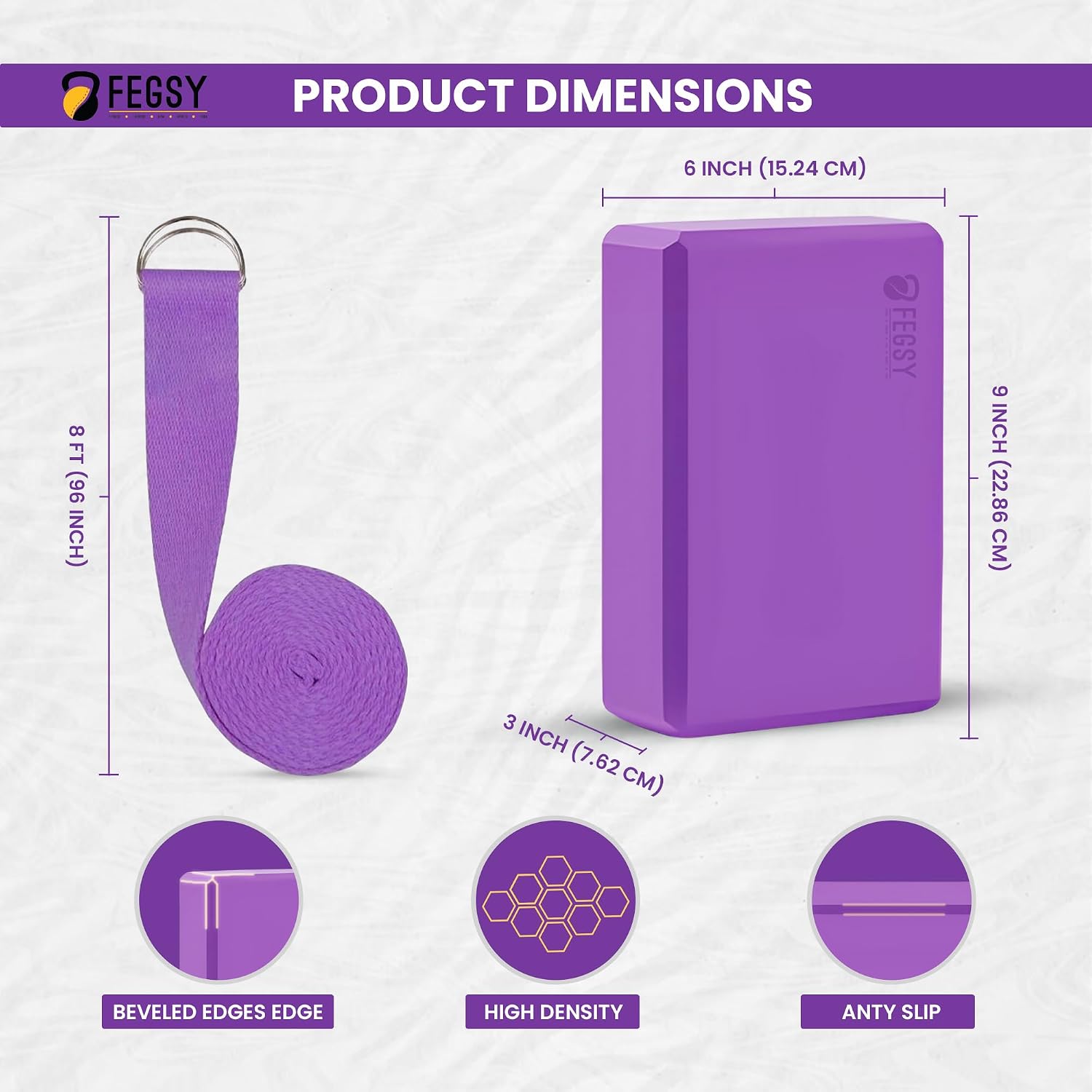
Affiliate Disclosure: Links above are affiliate links. We earn a small commission if you purchase at no extra cost to you. We only recommend products we genuinely believe in.
Advertisement
Frequently Asked Questions
How is somatic yoga different from regular yoga?
Can somatic yoga replace therapy or anxiety medication?
How long before somatic yoga actually helps with anxiety?
Is polyvagal theory scientifically proven?
Can somatic practice bring up difficult emotions?
Previous
Nail Art Trends 2026: Easy Designs You Can Actually Do at Home
Next
Friendship Day 2026: Thoughtful Ways to Celebrate and Gifts That Are Not Generic

Written by
Manali Patel
Manali Patel is the founder and lead beauty editor at Beauty & Blushed. With over 7 years of experience in the beauty and wellness industry, she is a certified skincare consultant and trained yoga practitioner who specialises in skin health, haircare, and holistic women's wellness. Her work has helped thousands of Indian women build practical, sustainable self-care routines that actually fit their lives.
More about Manali →Advertisement
Related Articles

Nervous System Regulation: Everyday Techniques for Chronic Stress
Physiological sighs, cold water on the face, and humming actually shift your nervous system state. Here is how…

Yoga Props for Beginners: What You Actually Need to Start (And What You Don't)
A beginner needs very little equipment to start yoga. Here is what actually matters, and the free household su…

Yoga for Self-Love: Building a Kinder Relationship With Your Body
Yoga for self-love is about how a pose feels, not how it looks. Here is a gentler way to practice that builds…
