


Sunscreen is the single most important skin health and anti-ageing step in any routine - melanin does not fully protect against UV damage regardless of skin tone. In India's consistently high UV index, a broad-spectrum SPF 30-50 worn daily and reapplied every two hours outdoors is essential for everyone, including those with medium and deeper complexions.
Key Takeaways
- UV radiation causes up to 80 percent of visible skin ageing including fine lines and dark spots.
- SPF 30 blocks 97% of UVB rays. The difference between SPF 30 and SPF 100 is minimal.
- UVA rays that cause ageing penetrate through glass and clouds all year round.
- Darker skin tones still need daily SPF. Melanin only provides the equivalent of SPF 13 protection.
- Apply a quarter teaspoon for the face and neck. Most people apply far less than this.
Advertisement
Every dermatologist on the planet agrees on very little. The field of skincare is full of legitimate debate - about the best retinol approach, the optimal cleansing method, which active ingredients to combine. But on sunscreen, there is universal consensus: it is the single most effective anti-ageing and skin-protective product available, and most people use it incorrectly or not at all.
Research consistently attributes 80-90% of visible skin ageing - fine lines, uneven tone, rough texture, pigmentation - to UV radiation, not chronological age. In India, where UV index levels are among the highest in the world year-round, and where hyperpigmentation and melasma are among the most common skin concerns, the absence of a consistent SPF habit is the single biggest obstacle most people face between their current skin and the skin they want.
Understanding UV Radiation: UVA vs UVB
Sunscreen protects against two types of ultraviolet radiation, and understanding the difference is important because they cause different types of damage:
- UVB rays are responsible for sunburn. They affect the outer layers of skin and are the primary cause of most skin cancers. UVB intensity varies with season, time of day, and cloud cover - stronger in summer, weaker in winter.
- UVA rays penetrate much more deeply into the skin, reaching the dermis where collagen and elastin live. UVA is the primary cause of premature ageing, wrinkles, and the DNA changes associated with skin cancer. Critically, UVA intensity is relatively constant year-round, is not blocked by clouds, and penetrates glass - meaning you are exposed to UVA indoors by a window and on overcast days.
Effective sun protection requires a broad-spectrum sunscreen that filters both UVA and UVB. SPF alone only measures UVB protection. Look for "broad-spectrum" on the label, PA++ ratings (which measure UVA), or specific UVA filters like zinc oxide, Tinosorb S and M, or avobenzone.
Also Read
Advertisement
What SPF Numbers Actually Mean
The SPF number indicates how much longer you can stay in the sun before experiencing UVB-caused redness compared to unprotected skin. SPF 30 filters 97% of UVB rays; SPF 50 filters 98%; SPF 100 filters 99%. The difference between SPF 30 and SPF 50 is meaningful but not enormous - what matters far more than SPF number is whether you apply enough and reapply frequently.
SPF 30 is the minimum dermatologists recommend for daily use. SPF 50 is preferable for:
- Extended outdoor time
- Higher altitudes (UV intensity increases ~4% per 300 metres)
- Reflective surfaces like water, sand, or snow
- Individuals with a family history of skin cancer or melasma
- Anyone using active ingredients like retinol or acids that increase photosensitivity
The Application Amount Problem
SPF ratings are measured at a specific application amount: 2mg per cm² of skin. In practice, studies consistently find that people apply 20-50% of this amount. Applying half the required amount of SPF 50 gives you protection closer to SPF 7 in practical terms.
For the face alone, this translates to approximately ¼ to ½ teaspoon of sunscreen (or two finger lengths). For face and neck together, a full teaspoon. This likely feels like more than you have been applying. It probably is more than you have been applying.
Chemical vs Mineral Sunscreens: Which Is Right for Indian Skin?
Sunscreens filter UV radiation through two mechanisms:
Chemical (Organic) Sunscreens
Chemical filters like avobenzone, octinoxate, and oxybenzone absorb UV radiation and convert it to heat, which is released from the skin. They are invisible on application, lightweight, and generally do not cause white cast - making them particularly suitable for deeper Indian skin tones where white cast from mineral sunscreens is a significant concern.
Mineral (Inorganic) Sunscreens
Zinc oxide and titanium dioxide physically sit on the skin's surface and scatter UV radiation. They are the only options considered completely safe during pregnancy (chemical filters are absorbed into the bloodstream at low levels) and are excellent for sensitive skin. The downside is white cast, which is particularly obvious on medium to deep skin tones.
Hybrid Sunscreens
Many modern formulas combine both chemical and mineral filters for broad-spectrum coverage with minimised white cast. Korean sunscreens have particularly excelled in this area - lightweight, cosmetically elegant formulas with no white cast are widely available and have revolutionised daily SPF use. Several are now available in India through Nykaa and speciality K-beauty retailers.
Reapplication: The Step Everyone Skips
Chemical sunscreen filters degrade under UV exposure. The protection of a morning application diminishes over the course of the day, which is why reapplication every two hours during outdoor exposure is the standard recommendation. Most people apply sunscreen once in the morning and consider the job done - which is better than nothing, but still insufficient for extended outdoor time.
Practical reapplication options:
- SPF setting spray - can be applied over makeup
- SPF powder - portable and makeup-friendly
- SPF cushion - popular in Korean beauty, provides coverage and SPF simultaneously
- Reapplying sunscreen before makeup application, then using an SPF setting spray through the day
Sunscreen for Indian Skin Tones: Addressing White Cast and Hyperpigmentation
The two most common barriers to sunscreen use in India are white cast and the misconception that darker skin tones do not need sun protection. Both deserve direct address.
White cast is a legitimate concern for medium to deep skin tones and has historically been a reason many people avoid sunscreen consistently. However, modern hybrid and chemical-only formulas have entirely eliminated this issue. Brands like Biore UV (Japanese, available online in India), Beauty of Joseon Relief Sun (Korean), La Shield, and Re'equil have excellent options that leave no white cast on Indian skin tones.
On the melanin myth: people with more melanin in their skin have some natural UV protection, equivalent to approximately SPF 13. This is not sufficient protection against the UV levels India experiences. Dark skin is absolutely susceptible to UV-induced skin cancer, premature ageing, and hyperpigmentation. In fact, hyperpigmentation and melasma - which are directly triggered and worsened by UV exposure - are more visible and more difficult to treat in deeper skin tones. Read our guide on building a morning skincare routine for more on combining SPF with other protective habits, and our niacinamide guide for the best ingredient to use alongside SPF to actively fade existing hyperpigmentation.
Key Takeaway
Sunscreen is not optional in a skincare routine. It is the foundation on which every other skincare effort rests - because UV radiation will undermine the benefits of every serum, every treatment, and every lifestyle change you make if skin is unprotected during the day. SPF 30 minimum, broad-spectrum, applied generously every morning. This single habit change will do more for your skin over five years than any other skincare decision you make.
Top Picks For You
Handpicked & Editor Approved
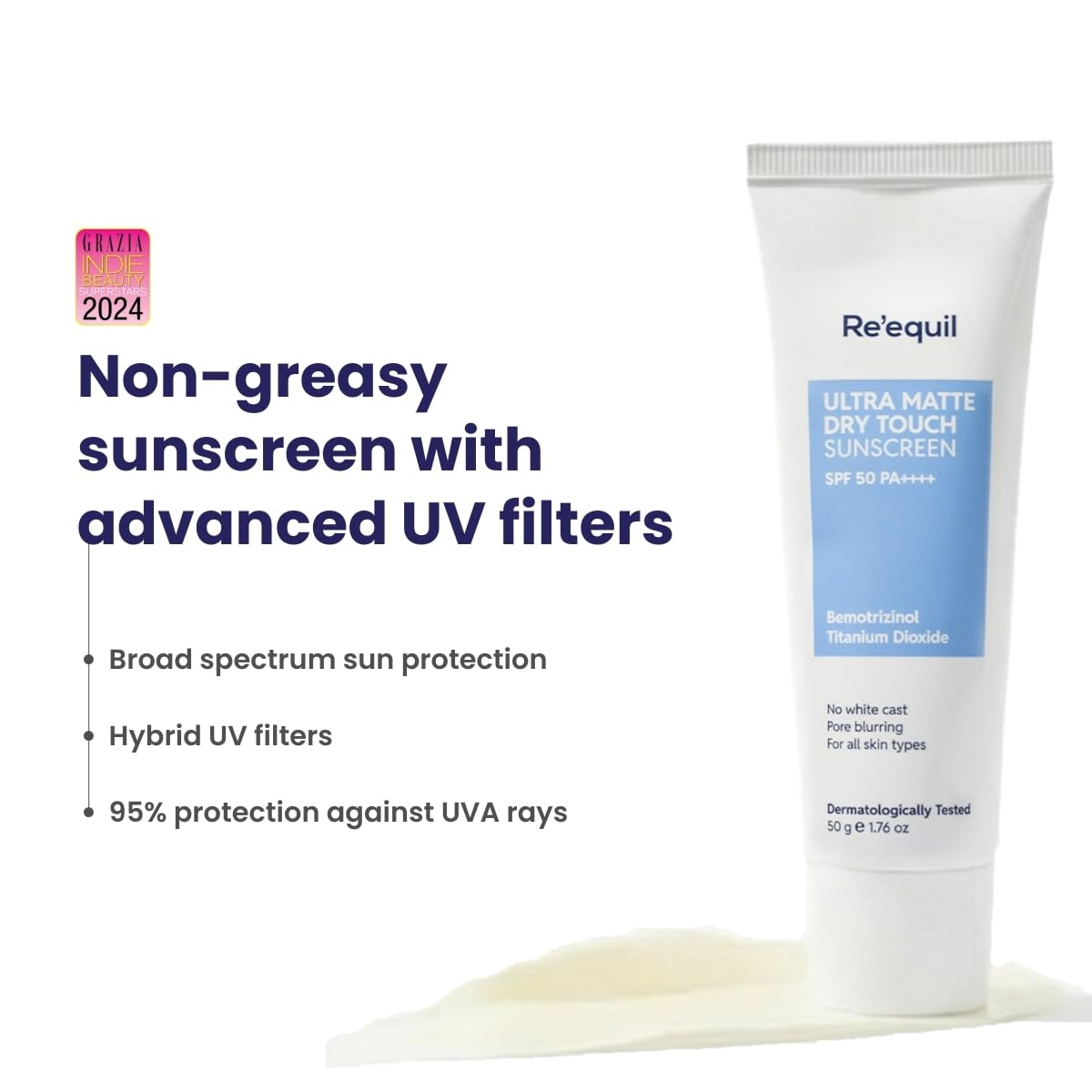
Re'equil Oxybenzone Free SPF50

Minimalist SPF 50 Sunscreen

Neutrogena Ultra Sheer SPF50
Affiliate Disclosure: Links above are affiliate links. We earn a small commission if you purchase at no extra cost to you. We only recommend products we genuinely believe in.
Advertisement
Frequently Asked Questions
What does the SPF number actually mean?
Do darker Indian skin tones really need sunscreen?
Should Indian skin use chemical or mineral sunscreen?
How much sunscreen should I apply and how often?
What does broad-spectrum mean and why does the PA rating matter?
Why is UVA protection important even indoors?
Previous
Hyaluronic Acid: The Complete Guide to Getting Maximum Hydration
Next
Hair Oiling: Does It Actually Work? The Science and the Right Technique

Written by
Manali Patel
Manali Patel is the founder and lead beauty editor at Beauty & Blushed. With over 7 years of experience in the beauty and wellness industry, she is a certified skincare consultant and trained yoga practitioner who specialises in skin health, haircare, and holistic women's wellness. Her work has helped thousands of Indian women build practical, sustainable self-care routines that actually fit their lives.
More about Manali →Advertisement
Related Articles

The Perfect Morning Skincare Routine: 5 Steps That Take Under 10 Minutes
A morning routine does not need to be complicated. Five targeted steps done consistently every day will always…

Collagen-Boosting Foods You Can Find in Any Indian Kitchen
Collagen supplements are trending-but the best way to support collagen is with the nutrients your body needs t…

The Anti-Ageing Diet: Foods That Fight Wrinkles From the Inside
How fast and visibly you age is significantly influenced by what you eat. These are the foods and eating patte…
